
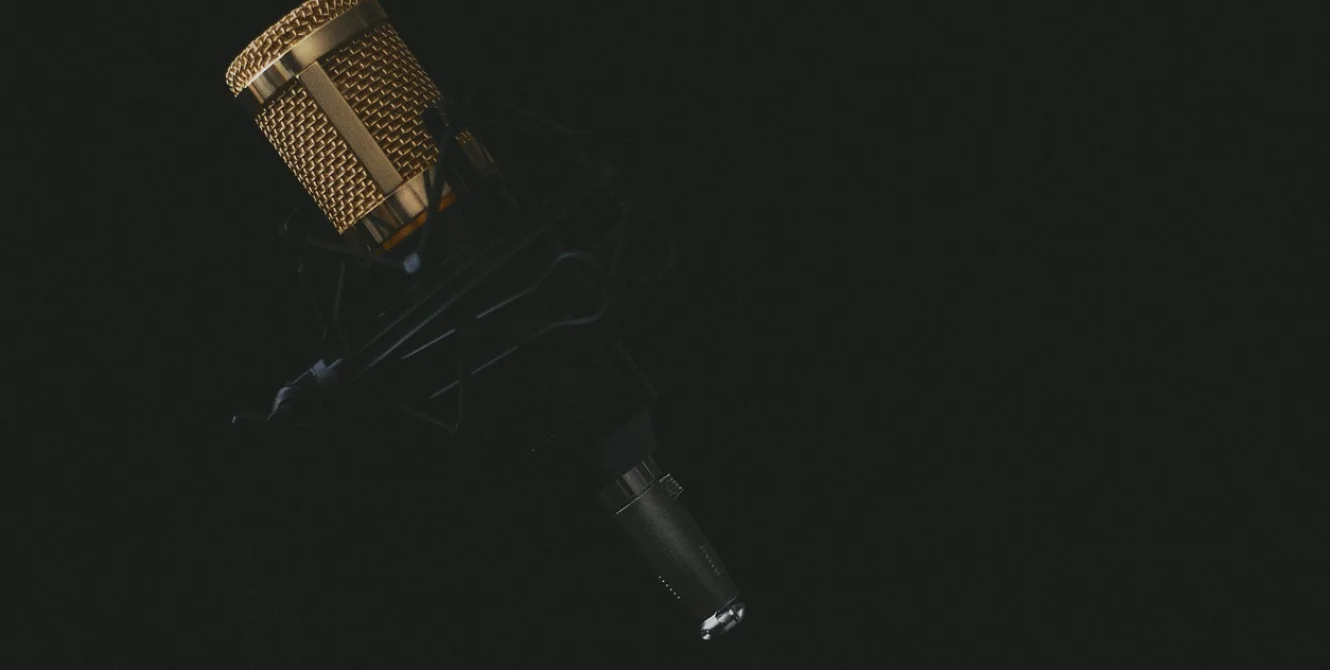
Lavalier or Boom Microphone for a Live News Desk: Which to Choose
A plain comparison of clip-on lavalier microphones and overhead boom microphones for news desks and live sets, with a clear recommendation based on how the studio actually runs.
The choice in front of most news studios
Almost every studio that asks us about sound arrives at the same fork: clip a small lavalier microphone to each presenter, or hang a boom microphone above the desk and keep the talent free of cables. Both work. Both fail in predictable ways. The useful question is which set of failures your crew can live with during a live bulletin, when there is no chance to stop and fix anything.
This note compares the two for a typical news desk with one or two presenters, a producer in the gallery and a programme that goes out live. I will describe how each behaves in rehearsal and on air, then give a recommendation. It is written in mid autumn, when many teams are reviewing their sets before the winter schedule, so the comparison leans on what causes trouble over a long run of daily shows rather than a one-off shoot.
I am leaving out radio microphones for roaming reporters and handheld stick microphones for vox pops. Those are different problems with their own answers. Here we stay at the desk, where the presenter sits in roughly the same place every day and the room is under your control.
How a lavalier behaves on a live desk
A lavalier sits close to the mouth, usually clipped to a lapel or placed under a shirt placket, so it picks up a strong, consistent voice almost regardless of the room. That closeness is its great virtue. Studio noise, a rustling script or a chatty gallery speaker feed matter far less, and the level stays steady when a presenter turns to face the second camera.
The weaknesses are practical. Fabric rubs against the capsule, and a silk blouse or a stiff jacket can produce clothing noise that is hard to remove live. Placement has to be redone for every presenter and every outfit, and a clip that shifts during a long bulletin changes the tone mid-sentence. There is also a cable or transmitter pack to hide, which takes time before every show.
Guests are the awkward case. A visiting contributor needs to be wired up in a few minutes, often nervous, often wearing something unhelpful. Crews who rely on lavaliers need a calm routine for this, or the first thirty seconds of an interview suffers.
- Strong, steady voice level close to the mouth
- Little pickup of room noise and gallery spill
- Clothing rustle and shifting clips are the usual faults
- Every new presenter or guest needs fitting and checking
How a boom microphone behaves on a live desk
A boom microphone, whether held on a pole or fixed overhead, sits outside the shot and captures the voice as the audience would hear it in the room. The sound is more natural and open, and presenters are not tethered to anything. Guests simply sit down and talk, which removes the nervous fitting routine entirely.
The cost is distance. The further the capsule is from the mouth, the more of the room comes with it: the hum of lighting, ventilation, an echoing floor, the clatter of a keyboard under the desk. A studio with hard surfaces and no acoustic treatment will sound thin and hollow on a boom, however good the microphone. Movement is another limit. If a presenter leans back or turns away, the level drops unless someone is operating the pole.
A fixed overhead boom avoids the operator but also fixes the pickup pattern to one seat position. That suits a locked desk with two chairs and little else. It suits a dynamic set with a standing area far less.
What decides it: the room, the crew and the set
Three things settle the question more reliably than microphone specifications. The first is the room. If the studio has treated walls, a carpeted or softened floor and quiet air handling, a boom can sound excellent. If it is a bare room with fans running, a lavalier will rescue you.
The second is the crew. A lavalier setup needs a person who can fit and check microphones quickly before every show, and who will watch for clothing noise during the bulletin. A boom setup needs either a trained pole operator or a very disciplined desk position. Count the people you actually have on a normal morning, not the ones you have on a good day.
The third is the set. Presenters who stay seated at one desk suit either choice. Presenters who stand, walk to a screen wall or move between positions are far better served by lavaliers. Be honest about how much movement the format really contains, and about how many guests you host each week.
- Room: treated and quiet favours boom, bare and noisy favours lavalier
- Crew: who can fit microphones or operate a pole every day
- Set: seated and fixed suits both, moving talent suits lavalier
- Guests: frequent visitors favour whichever option fits fastest
Our recommendation for most news desks
For a typical live news desk, we recommend lavalier microphones on the presenters as the main source, with a boom or desk microphone kept as a backup rather than the first choice. The reasoning is about risk. A lavalier fails in small, fixable ways, and the sound is acceptable even when it is not perfect. A boom in an untreated room fails in a way that cannot be fixed during the show.
Run both together where you can. Place the lavalier on the main mix and keep the boom on a spare fader, so the audio engineer can bring it in if a clip fails or a presenter moves out of range. That arrangement costs little more than the lavalier alone and gives the gallery a second chance before the audience notices anything.
If your room is genuinely well treated and your format is locked to a seated desk, a boom can be the primary source and will sound more natural. We check this by listening in the room, not by reading a specification, so the answer is earned rather than assumed.
Setting up whichever you choose
Whichever route you take, the weeks before a new schedule are the time to test, not the first morning. Record a full rehearsal bulletin on each option, with the studio lights, ventilation and gallery running as they will on air, and listen back on the monitors the director uses. Problems that hide in a quiet empty room appear at once under working conditions.
Talkback deserves the same attention. A clean presenter feed is wasted if the director cannot be heard in the earpiece over the studio sound, so check the intercom levels at the same time as the microphones. Mark fader positions on the desk after a good rehearsal and note which presenter sits where, so the next engineer can start from a known setting.
Keep spares of the small things that fail: clips, windscreens, batteries and a short length of cable. They cost little and decide whether a bulletin starts on time.
- Rehearse with all studio noise sources running
- Listen back on the director's monitors, not only headphones
- Check talkback levels alongside microphone levels
- Keep spare clips, windscreens and batteries to hand
Lavalier or boom is less a question of quality than of what your studio can control. Where the room is noisy, the talent moves and guests arrive often, the lavalier wins and the boom stays as a backup. Where the room is quiet and the desk is fixed, a boom is a fair first choice. Whichever you pick, rehearse it under real conditions and listen carefully before the schedule starts.