
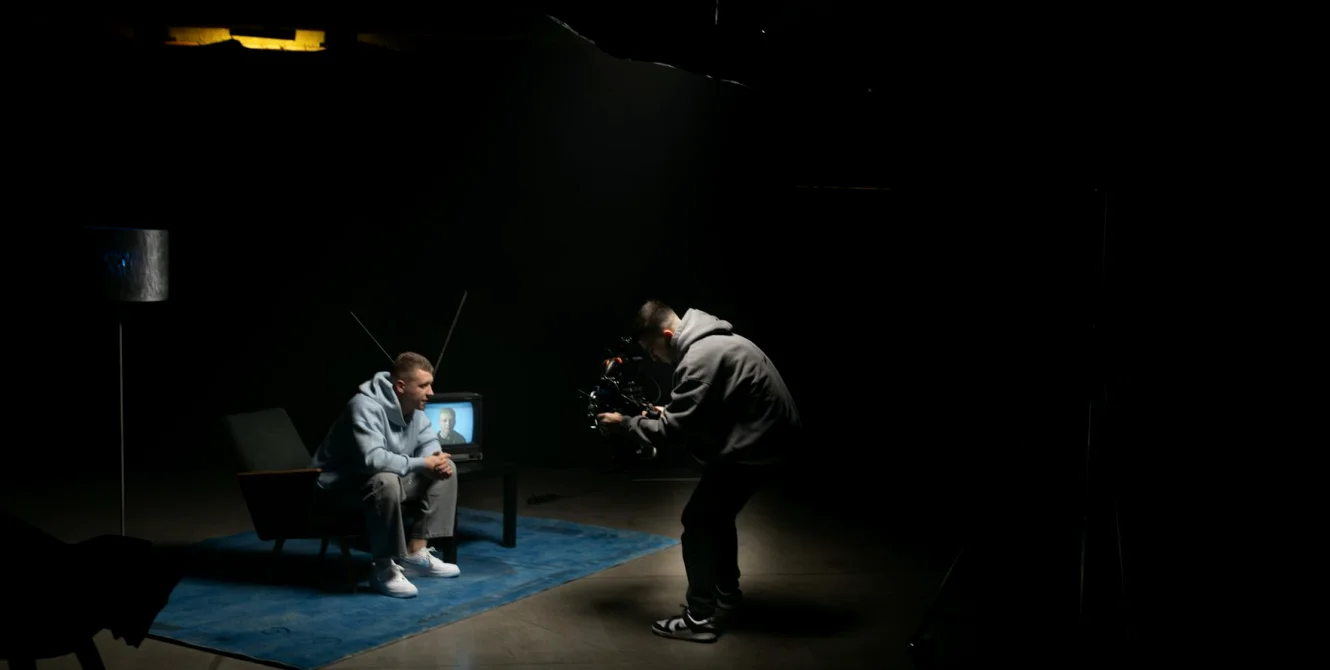
How long before a new camera operator is ready for a live programme?
The question we hear most from studio managers: how long does training take before an operator can safely take a live camera? Our honest answer, with what shapes the timeline.
The question behind the question
Almost every conversation about Camera Operation Training starts the same way: a producer or studio manager asks how many weeks it takes before a new operator can be trusted on a live show. It is a fair thing to ask, because a rota has to be filled and a gallery has to know who it can rely on.
The difficulty is that readiness is not a number of days. It is a set of behaviours that show up under pressure: holding a frame while the director talks in your ear, finding the next shot without looking away from the presenter, and recovering calmly when a guest leans out of position. Hours in a room matter less than what happens during those hours.
So our answer always begins with a question back: what will this person be asked to do on air, and with which equipment? A single locked-off wide on a pedestal is a very different job from a three-camera news bulletin with robotic cameras recalled by shot number.
What the first sessions actually cover
In the opening sessions we work on the basics that everything else rests on: posture and grip, how to balance the camera head, how to set friction and counterbalance so a move starts and stops without a jolt. Operators often want to jump straight to clever moves, but a camera that is badly balanced will undermine every one of them.
Framing comes next. We practise the standard sizes for a presenter, from wide to close-up, and how much headroom and looking room each one needs. Operators learn to judge these by eye, then check against the monitor, not the other way round.
Only after that do we introduce smooth pedestal moves, slow pushes and pulls, and following a presenter who stands up or walks to a screen. Each exercise is short and repeated, because muscle memory is the real goal. Most people feel noticeably steadier after a handful of focused sessions.
- Balance, friction and counterbalance set before any move
- Standard shot sizes, headroom and looking room
- Slow pushes, pulls and pedestal moves repeated until they feel natural
Where live pressure changes things
Practice shots and live programmes are not the same experience. Once talkback is running, the director is calling shots, and a presenter is speaking to an audience, even experienced operators tighten up. We therefore move into rehearsal conditions as early as the studio allows, with a real run-sheet and real cues.
This is where Priya, who leads our camera sessions, spends most of her attention. She watches for the small signs of strain: a raised shoulder, a jerky correction, a glance at the wrong monitor. Addressing those early is far more useful than adding another technique.
We also rehearse the unglamorous situations: a cue that arrives late, a story that is dropped from the running order, a presenter who changes position at the last second. Operators who have met these in rehearsal tend to treat them as routine when they happen on air.
Robotic cameras and recalled shots
Many news studios now run some or all cameras robotically, with one operator controlling several heads from a desk. The skills overlap with pedestal work but are not identical. Framing is still judged by eye, yet the moves are built from stored positions and speeds that must be set up carefully before the show.
We teach operators to build shot lists that suit the programme, to name and organise their presets sensibly, and to check them against the actual set and desk position during rehearsal. A preset that was right yesterday can be slightly off after furniture has been moved.
Equally important is knowing when to override the machine. If a guest sits somewhere unexpected, the operator must be comfortable taking manual control quickly and returning to the stored shots afterwards without confusing the gallery.
- Building and naming presets that suit the running order
- Checking stored positions against the real set before each show
- Taking manual control and returning to presets cleanly
What shapes the timeline for your crew
Several practical factors decide how long things take. Prior experience matters, though not always in the way people expect: someone who has operated handheld in a different setting may need to unlearn habits before pedestal work feels natural. The number of cameras in your studio, the complexity of the programme, and how often the operator can practise between sessions all play a part.
Access to the studio is a large factor. A trainee who can touch the camera several times a week will progress far faster than one who only sees it on the day of a session. Where the studio is busy, we sometimes suggest short, frequent slots over a single long day.
We do not promise a fixed date by which someone will be ready. What we can offer is a clear sense, after the first couple of sessions, of how the person is progressing and what the remaining gaps are, so your team can plan the rota with honest information.
What to prepare before booking sessions
A short list of preparations makes the training considerably more useful. Tell us which cameras and support heads you use, whether any are robotic, and what the typical programme looks like. If you can share a recent running order, even better, because we can build exercises around the shots your operators will really be asked for.
It also helps to decide in advance who should attend. Training a pair of operators together lets them cover for each other and keeps the standard consistent across the rota. A producer or director sitting in for part of a session can be valuable too, since they learn what to expect from the operator.
Finally, agree what success looks like for your team. For some it is confident cover for a single bulletin; for others it is a full live show. Having that stated clearly at the start keeps the sessions focused on the right skills.
- Camera and support head models, and any robotic units
- A recent running order or typical programme outline
- Names of the operators who will attend
- A clear statement of the role they will be covering
There is no honest single answer to how long it takes, but there is a sensible way to find out: start with the actual job the operator will do, train for that, and check progress under rehearsal conditions rather than guessing. Most teams find that steady, repeated practice with real cues does more than a long block of theory. If you are weighing up training for a new operator, get in touch through the contact page and describe your studio and programme.